
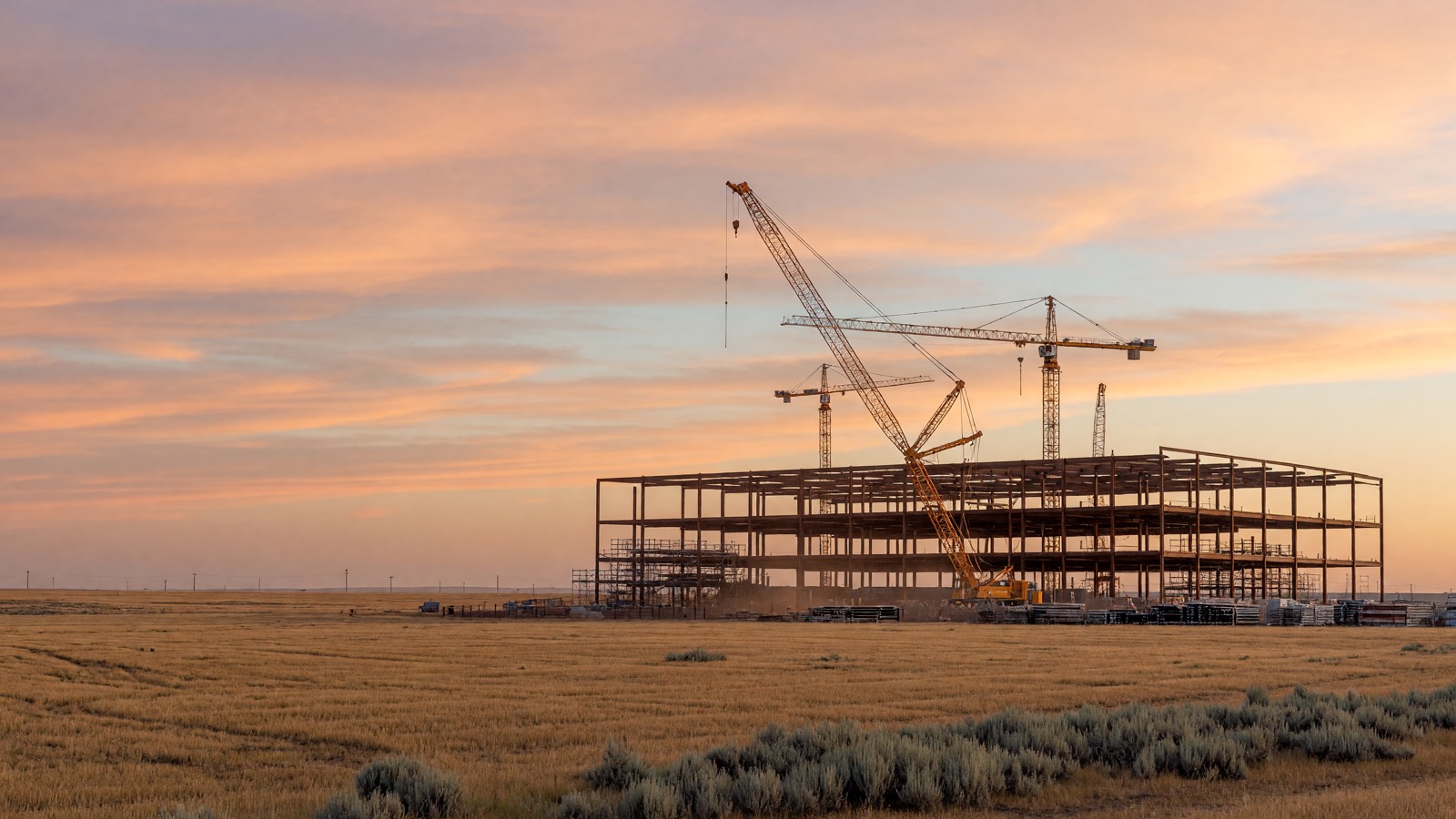
Meta broke ground on July 8 on its first data center in Canada, a roughly 1-gigawatt AI-optimized facility in Sturgeon County, Alberta, north of Edmonton. The investment is more than C$13 billion, a figure worth stating precisely since it is Canadian dollars, not US, putting the real value closer to US$9 to 10 billion. It is Meta’s largest data center outside the United States and its 33rd globally.
The headline number is not the part that should shape how business readers think about this. The power source, the timeline, and the province it landed in all matter more than the dollar figure.
What is actually new
The facility will not come online until roughly 2030, and it is being built on a “bring your own power” model: a new natural-gas combined-cycle plant, the Greenlight Electricity Centre, developed with Pembina Pipeline and Kineticor, is being built specifically to supply it, also targeted for late 2030. That is a meaningful design choice. Rather than drawing on Alberta’s existing grid, which is already fielding a wave of data center demand, Meta is funding new dedicated generation. The project will draw power equivalent to roughly 800,000 homes once operational, and Meta says water use will stay below that of a typical Alberta golf course.
Construction will employ around 3,000 workers at peak over two to three years, with more than 300 permanent roles once operational, plus roughly C$60 million in local infrastructure spending on roads and water systems. Alberta Premier Danielle Smith framed the project as one of the largest private investments in Canadian history, which is accurate on the dollar figure even though the permanent job count is modest relative to the capital deployed, a pattern common to capital-intensive data center builds.
What this means for the Canadian AI economy
Meta is not alone in Alberta. The province is already fielding a proposed $70 billion data center project and a separate $10 billion facility from Synapse, and Sturgeon County itself sits in Alberta’s Industrial Heartland, a region the provincial government has spent years positioning for exactly this kind of capital. For Canadian businesses, the practical takeaway is that AI infrastructure capacity, and the jobs, contracts, and grid investment that come with it, is concentrating in specific provinces rather than spreading evenly, and Alberta is positioning itself as the country’s primary bet.
The dedicated natural-gas plant is also worth watching against the broader AI energy story we have covered before, including Google’s bet on fusion power for its own AI buildout. Hyperscalers increasingly treat power generation as infrastructure they need to own or co-fund directly, not a utility problem to leave to the grid, and Meta funding its own gas plant rather than drawing on Alberta’s existing supply is the same logic playing out with a more conventional fuel source.
What to watch
Watch whether the Greenlight Electricity Centre and the data center actually hit their 2030 targets together, since a four-year runway leaves real room for delay on either side. Watch too for how the other Alberta megaprojects progress: if the $70 billion proposal and the Synapse facility both advance on similar timelines, this stops being one company’s bet and becomes a genuine regional buildout on the scale we have tracked in the AI capital stack. For the full national picture in verified numbers, see our AI data center pillar.
AI and business tech news, verified by a physician who reads the filings. One email a week, no noise.