
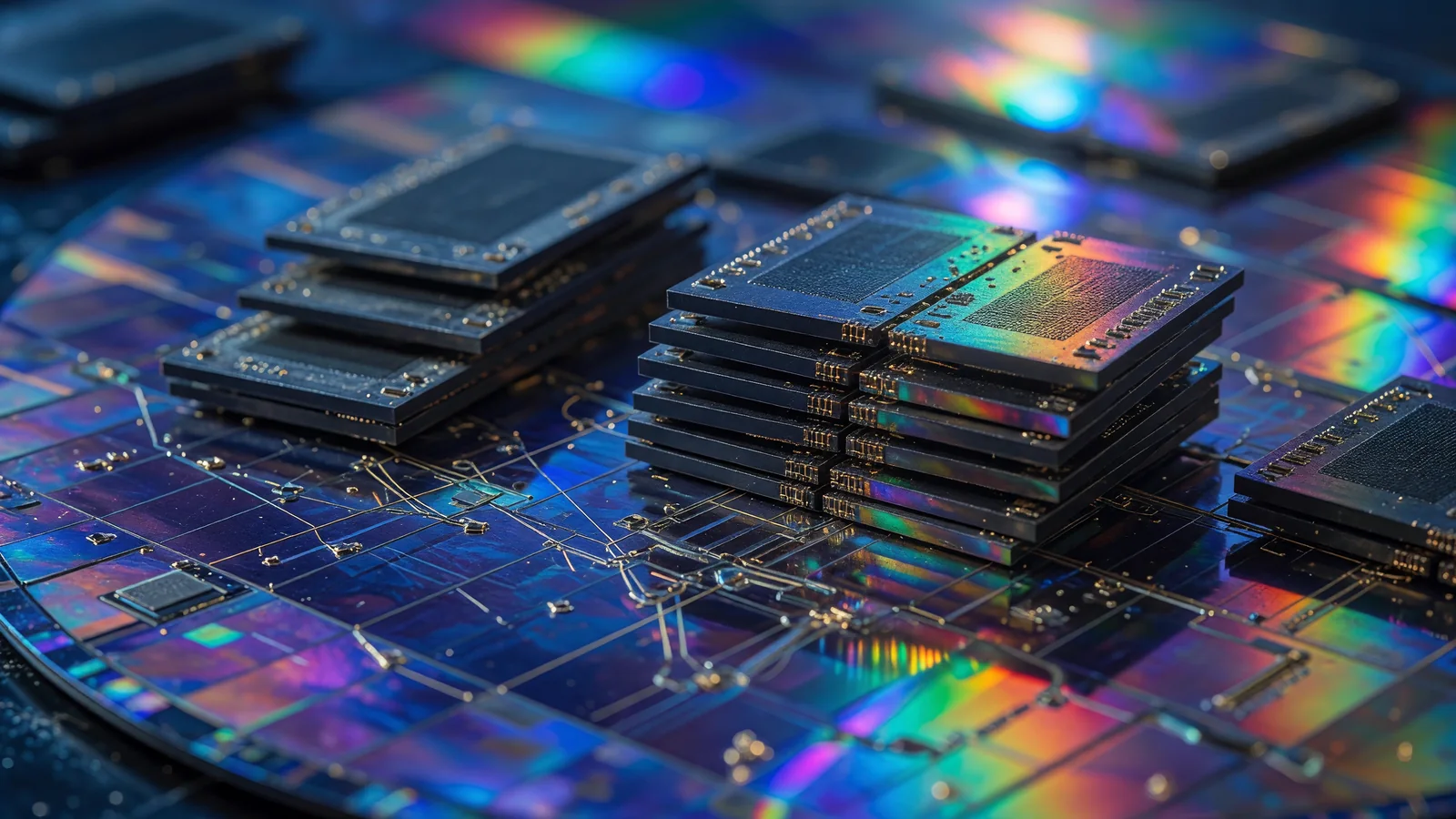
The AI buildout just produced one of the most extraordinary earnings guides in semiconductor history. Samsung Electronics expects operating profit of roughly 89.4 trillion won, about $58 billion, for the second quarter, per its official guidance. That is approximately 19 times the depressed quarter a year ago, and up 56 percent from the previous quarter’s record.
Revenue guidance sits near 171 trillion won. The driver is not phones or televisions. It is high-bandwidth memory, the stacked chips that feed AI accelerators, where demand from data-center buildouts has turned memory from a brutal cyclical business into the choke point of the technology economy.
The memory supercycle is the AI buildout’s second act
Every GPU shipped needs HBM stacked beside it, and the capacity to make advanced memory takes years to add. That scarcity is showing up across the supply chain at once: in Samsung’s guide, and in the demand signals downstream, like Dell’s $51.3 billion AI server backlog. When one quarter of one company’s operating profit approaches the annual GDP of a small country, the market is telling you where the bottleneck lives.
The year-over-year multiple deserves honest framing: the comparison quarter was unusually weak, which inflates the 19x figure. The sequential move, up 56 percent from an already-record first quarter, is the cleaner signal.
Why memory capacity cannot chase this demand
The reason a demand surge produces profit rather than just volume is that high-bandwidth memory supply is nearly fixed on any horizon that matters. HBM is not conventional DRAM: die are stacked, bonded through silicon vias, and packaged in processes with lower yields and longer qualification cycles than commodity memory, and converting a standard DRAM line to HBM production consumes far more wafer capacity per usable bit. A capacity decision made today produces sellable HBM years out. When demand triples inside that window, price does all the adjusting, and the profit lands on whoever already built the lines.
The strategic weight of the moment is larger for Samsung than the number itself. The company spent 2024 and 2025 embarrassingly behind SK Hynix in HBM qualification at Nvidia, watching its smaller rival take the premium volumes. A guide like this one says the catch-up is monetizing at last, and it hands Samsung a war chest for the next capacity race precisely when SK Hynix has tapped public markets for its own. The classic risk in memory is that exactly this kind of quarter triggers the overbuild that ends the cycle; the case that this time differs rests on the constraint we mapped in memory and megawatts, that HBM’s process complexity makes overbuilding physically slower than it ever was in commodity DRAM.
What to watch
Watch whether Samsung converts guidance into confirmed results at month-end, how rivals SK Hynix and Micron guide against the same demand, and any capex announcements that follow. Memory makers historically overbuild at exactly this point in the cycle; whether AI demand is different is the trillion-won question. Two quarters on, that scarcity has only hardened: memory and megawatts, not GPUs, are now the AI buildout’s binding constraint, with Micron’s HBM sold out through 2027 and SK Hynix’s 2026 output pre-sold.
AI and business tech news, verified by a physician who reads the filings. One email a week, no noise.