
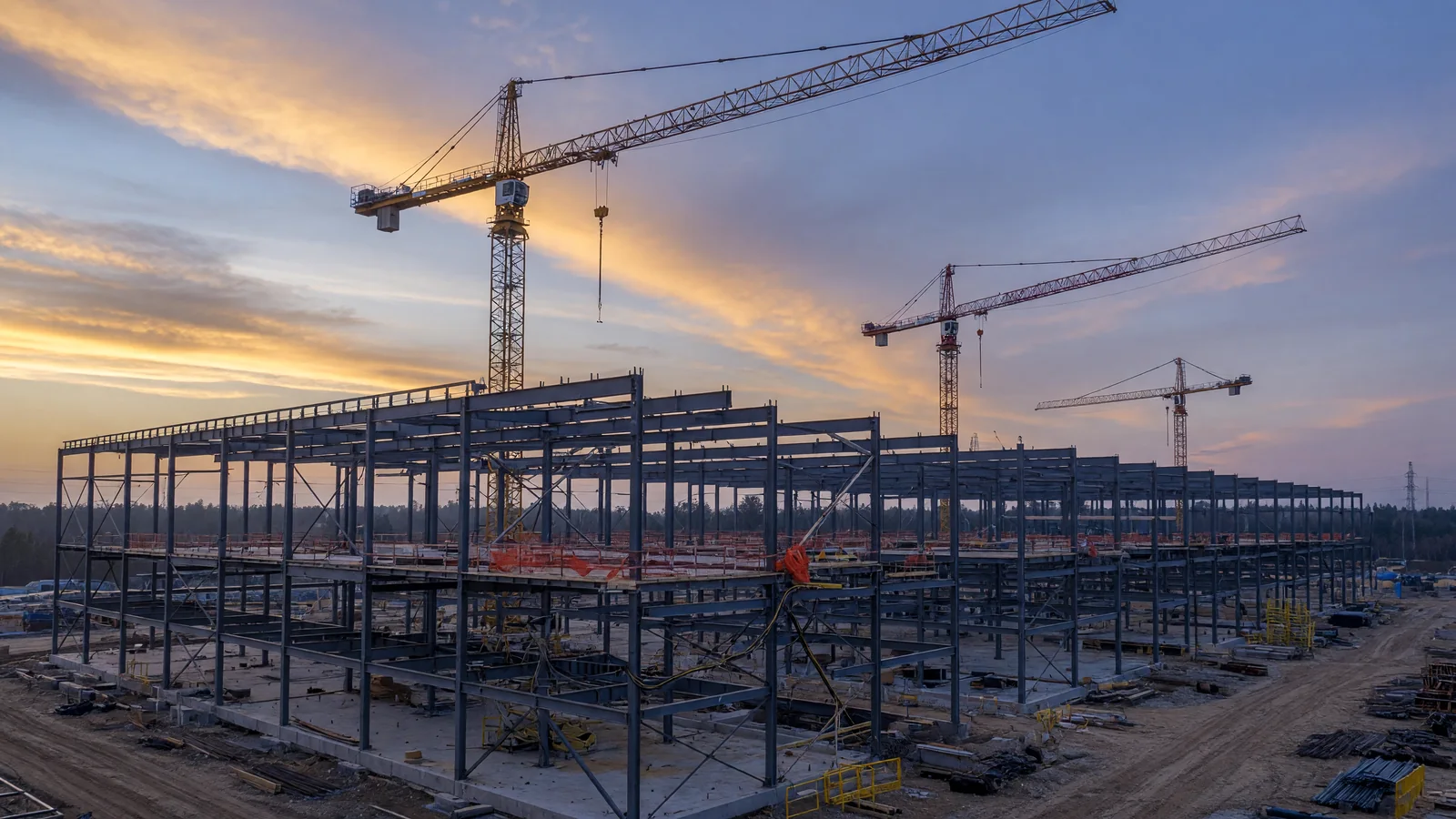
In one week, Amazon opened a $25 billion bond sale, Anthropic signed a $19 billion lease, Samsung guided to a record quarter on memory demand, and a neo-cloud secured a $900 million bank facility. These are not separate stories. They are one machine, the capital stack financing the AI buildout, and understanding its layers explains most of the technology economy’s headlines this year.
Layer one: hyperscaler balance sheets
At the base sit the cheapest dollars: investment-grade debt and cash flows from the giants. Amazon’s eight-tranche bond program, with maturities to 40 years, prices AI capacity like railroads and power plants were once priced. When this layer expands, everything above it gets cheaper to build.
Layer two: contracted-revenue landlords
Next come the developers who convert a tenant’s promise into financeable cash flow. TeraWulf’s 20-year Anthropic lease is the template: one anchor tenant of frontier scale turns a speculative site into a bond-like asset. Nscale’s bank revolver shows the same logic from the lender’s side, banks now underwrite contracted AI revenue. The equity layer keeps repricing too: Together AI’s $800 million round at $8.3 billion added the open-model neocloud to the stack.
Layer three: venture equity
Above that sits risk capital: Crusoe’s reported $3 billion round near a $30 billion valuation, and the fastest revenue ramps software has ever seen, per the 18-month $100M ARR cohort. Equity takes the risk that contracts and demand keep materializing. Even the data supply beneath the models is drawing institutional money now, as when Warburg Pincus priced bootstrapped web-data firm Oxylabs at $3.6 billion in its first outside round.
Layer four: the suppliers’ windfall
Every layer’s spending lands on the same suppliers: Dell’s $51 billion backlog, Samsung’s $58 billion quarter. Supplier earnings are the stack’s truth serum: they reveal whether the money above is actually being spent.
The two questions that decide how this ends
First, does end demand, the revenue of AI products themselves, grow into the capacity being financed? Second, what happens at the first missed lease or drawn-down covenant, when the stack’s layers discover how tightly they are coupled? Energy is already the physical constraint, which is why even fusion bets now belong in the picture. Watch the suppliers and the spreads. They will tell you first.
Frequently asked questions
Who is actually financing the AI data center buildout?
Four layers: hyperscaler bond issuance, developers who convert tenant leases into financeable revenue, venture equity into neocloud providers, and the hardware suppliers who fulfill the resulting orders.
Why are AI companies signing 20-year data center leases?
A long lease converts a speculative site into a bond-like asset a developer can borrow against, the same logic hyperscalers use when issuing multi-decade bonds for the same infrastructure.
Is the AI infrastructure boom funded by debt or equity?
Both, layered. Cheap investment-grade debt sits at the base, contracted-revenue leases and bank credit sit above it, and venture equity takes the u0440u0438u0441u043a layer at the top.
What would signal the AI capital stack is overextended?
A missed lease payment, a covenant breach at a neocloud, or supplier earnings that stop matching the spending headlines, since suppliers are the stack’s truth serum.
AI and business tech news, verified by a physician who reads the filings. One email a week, no noise.