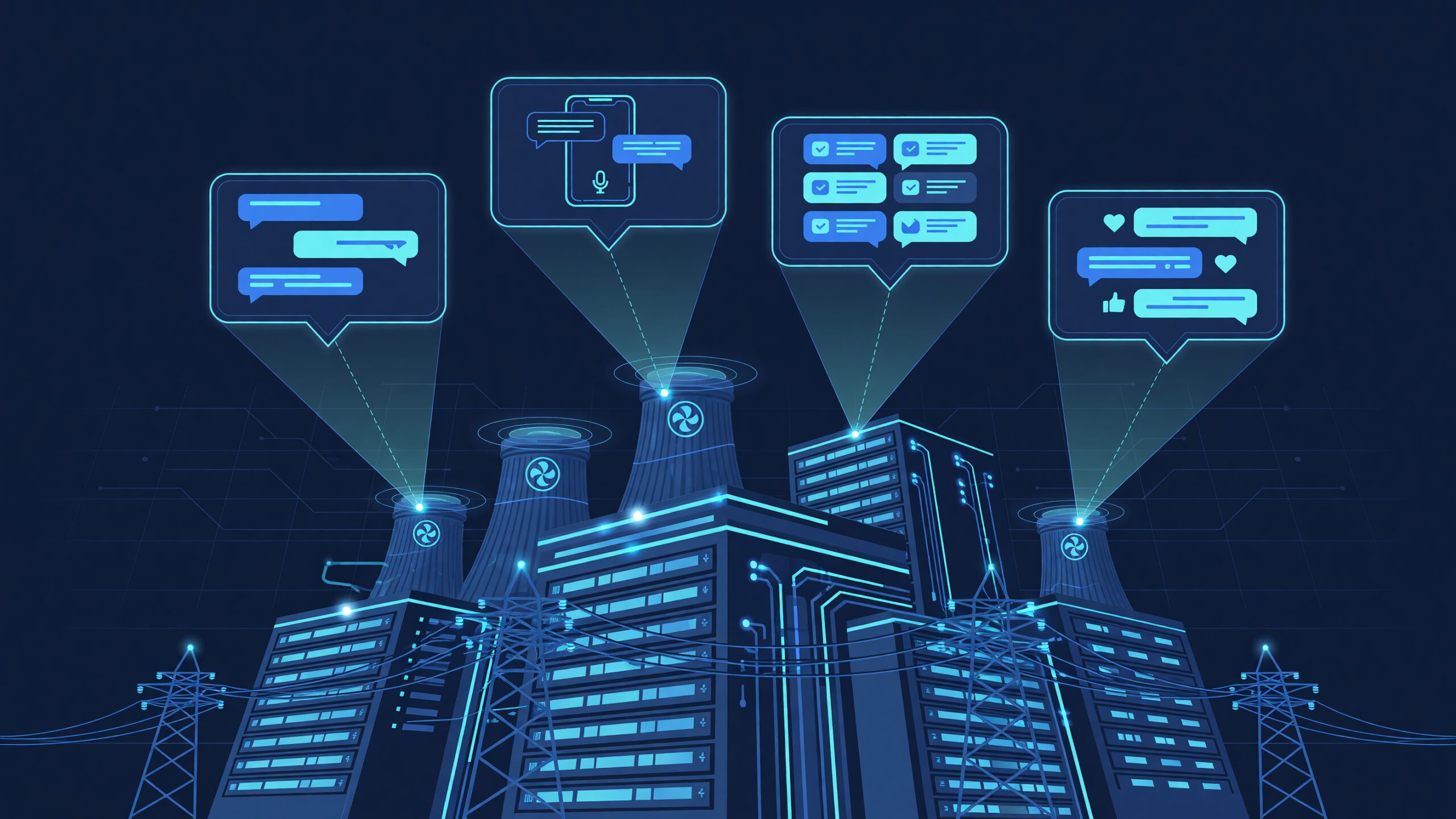
Meta AI is the assistant built into Facebook, Instagram, WhatsApp, and Messenger, which makes it the most widely distributed AI product on earth almost by default: Meta has said it reaches on the order of a billion people a month across its apps. This week the company showed what it is willing to pay to keep that position, lifting the price tag on its Hyperion data center in Richland Parish, Louisiana to more than $50 billion for a 5 gigawatt campus, up from $27 billion.
The 2026 story of Meta AI is a company with unmatched distribution and a self-admitted compute deficit, spending its way out: a $50 billion single-site buildout, a reorganized superintelligence lab, and, in the meantime, rented capacity from the same rivals it is racing.
What Meta AI is, and what runs it
Meta AI answers questions, generates images, and handles search-style queries inside the apps people already use, no separate download required. Since mid-2025 the models behind it have come out of Meta Superintelligence Labs, the division Mark Zuckerberg built around Alexandr Wang after the Llama era stalled, and its current Muse model family. Distribution is the moat: rivals have to win users; Meta AI is simply there.
That reach cuts both ways. When Meta shipped an @-mention feature for its Muse Image model that let anyone summon AI image generation into group chats, the backlash was immediate, and Meta pulled the feature within three days. An assistant a billion people did not ask for has a thinner margin for error than one they chose.
The $50 billion admission
Hyperion’s new price makes it one of the largest single infrastructure projects in American corporate history: 5 gigawatts of compute capacity in Louisiana, per Reuters, with Meta building its own power generation alongside, a pattern it already tested with its first Canadian data center. Corewire’s read on the announcement is here.
The urgency has a visible cause. Meta has been renting frontier capacity while its own buildout catches up, and in late June the Financial Times reported that compute is now so scarce that Google is rationing Meta’s access to Gemini models, disrupting internal projects. For a company whose assistant fronts a billion users, depending on a rival’s spare capacity is an unacceptable long-term position. Hyperion is the exit.
What it means for the industry
Meta monetizes attention, not tokens: the assistant exists to keep people inside apps whose revenue is advertising. That means Meta AI can be free at essentially unlimited scale, and it explains why Meta outspends rivals on infrastructure while charging users nothing. The capital stack funding this buildout, and who ultimately pays for it, is a question Corewire has covered in detail. Memory and megawatts, not model quality, are increasingly the binding constraint, and Meta just bid $50 billion for its share.
Frequently asked questions
What is Meta AI?
Meta AI is the AI assistant built into Facebook, Instagram, WhatsApp, and Messenger, with a standalone app as well. It answers questions, generates images, and searches, using Meta’s own models.
Is Meta AI free?
Yes. Meta AI is free inside Meta’s apps. Meta’s business model is advertising, so the assistant is designed to increase time spent in its apps rather than to sell subscriptions.
What AI model powers Meta AI?
Meta’s Muse model family, developed by Meta Superintelligence Labs, the AI division Meta reorganized in mid-2025 under chief AI officer Alexandr Wang. Earlier versions ran on Meta’s Llama models.
How many people use Meta AI?
Meta has said the assistant reaches roughly a billion people a month across its family of apps, a figure first disclosed in 2025. Because it is embedded in existing apps, reach and deliberate usage are not the same thing.
What is Meta Superintelligence Labs?
The division Mark Zuckerberg created in mid-2025 to consolidate Meta’s AI work, led by Alexandr Wang. It develops the Muse model family that now powers Meta AI and pursues Meta’s stated goal of superintelligence research.
What is Meta’s Hyperion data center?
Hyperion is Meta’s AI data center campus in Richland Parish, Louisiana. In July 2026 Meta raised the planned investment to more than $50 billion for about 5 gigawatts of capacity, up from an earlier $27 billion plan, making it one of the largest corporate infrastructure projects in US history.
AI and business tech news, verified by a physician who reads the filings. One email a week, no noise.