
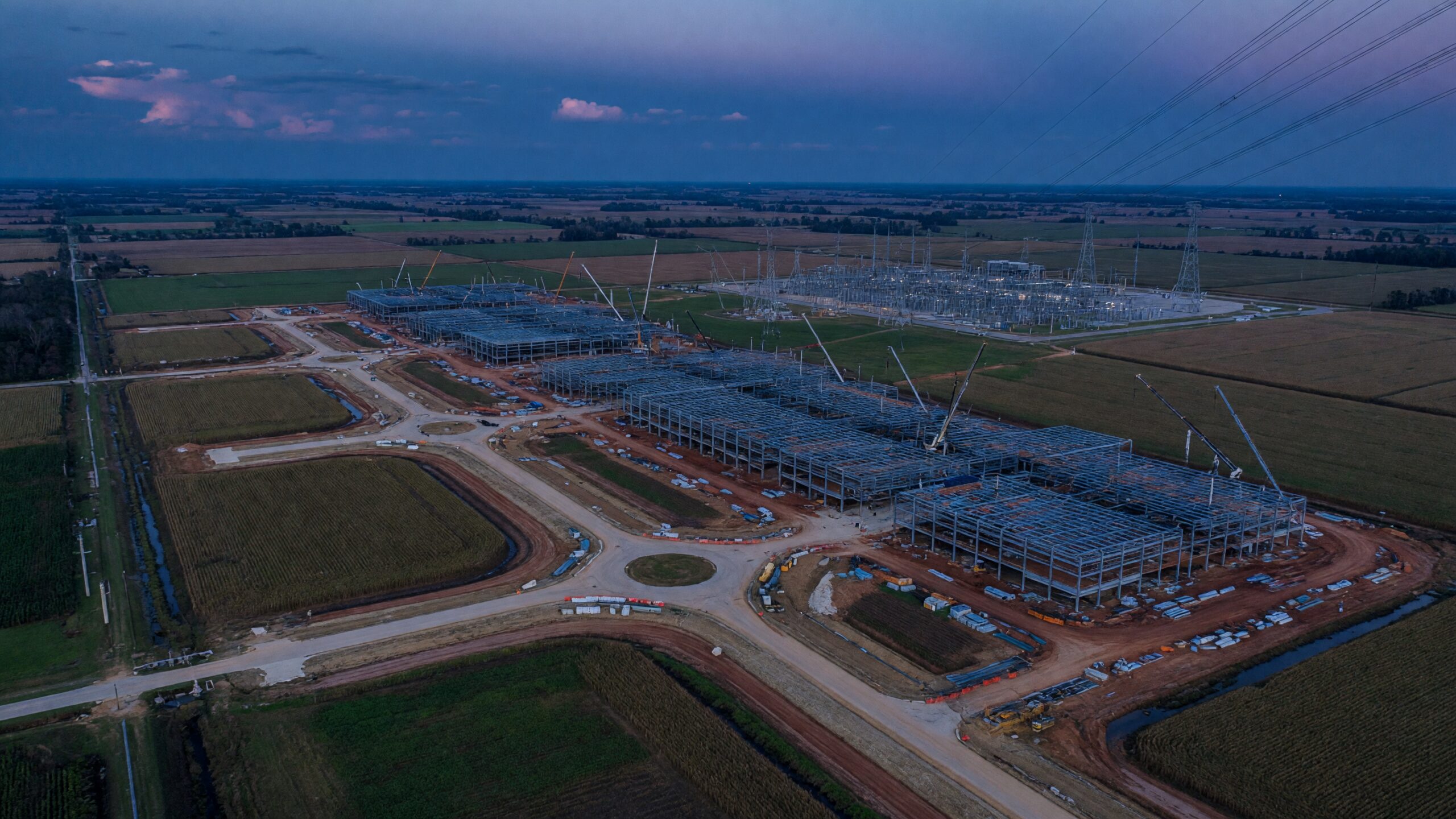
Meta said on July 13 that its Hyperion data center campus in Richland Parish, Louisiana will now cost more than $50 billion, a figure confirmed in the company’s own announcement and reported by the Wall Street Journal. That is nearly double the roughly $27 billion attached to the project’s financing last October. The campus itself is not new. The price is.
What’s actually new
Hyperion has been public since mid-2025, and its 5 gigawatt ambition has been known just as long. What changed this week is the budget and the schedule detail. Per CNBC, a Meta spokesperson confirmed the site is expected to reach 2 gigawatts by 2030 and the full 5 gigawatts around 2032. So the cost estimate has roughly doubled while the finish line has not moved closer.
Notably, Meta did not lead with the number. The announcement arrived as a community-benefits story, headlined around teachers and local businesses, with a quote from Rachel Peterson, Meta’s vice president of data centers. The $50 billion figure sits inside a post about school grants and workforce training. That is a deliberate choice of frame, and it worked: much of the day-one coverage led with teacher bonuses rather than an 85 percent cost inflation on the largest data center project in the country.
The numbers
The prior benchmark was the roughly $27 billion joint venture with Blue Owl Capital, a structure that the Journal reported keeps much of Hyperion’s cost off Meta’s balance sheet, with Meta holding a minority stake in the vehicle. The new “more than $50 billion” is Meta’s total regional investment framing, which also folds in more than $1 billion of local infrastructure spending. The two numbers are not a clean like-for-like, but the direction is unambiguous: the same campus, at the same capacity, now carries a far bigger price tag.
The grid context explains part of it. The US Energy Information Administration projects record national electricity demand in both 2026 and 2027, rising to 4,269 billion kilowatt-hours this year and 4,399 billion next, with data centers named as a primary driver. Everything a 5 gigawatt campus needs (turbines, transformers, switchgear, transmission, labor) is being bid up by every other hyperscaler at once. We covered the mechanics of that squeeze in our breakdown of why memory and megawatts now cap the AI buildout.
What Louisiana gets
The local windfall is real and measurable. The Journal reported that Richland Parish, one of the poorer parishes in Louisiana, collected a tax payment of about $22.4 million tied to the project, enough to fund teacher bonuses topping $50,000 in a district where that can approach a year’s salary. For a rural parish of under 20,000 people, a single data center campus has effectively rewritten the public budget.
One caution on the local-impact narrative: the most shareable numbers in this story trace back to Meta’s own announcement and to reporting the company facilitated. A widely repeated claim that a local family sold its farmland for $22 million could not be traced to a primary source; the verifiable $22 million figure in the record is the parish tax payment, not a land deal. The long-term questions (what happens to local power rates, water use, and parish finances if AI capex slows) are not answered by a bonus check, and they are the part of this story that will still matter in 2030.
The signal
The real story is repricing in flight. Hyperion went from roughly $27 billion to more than $50 billion in about nine months without adding a single announced gigawatt. That is the clearest data point yet that AI infrastructure costs are inflating faster than the projects themselves are growing, a dynamic we flagged in our explainer on the data center boom and one that shows up in Meta’s other siting decisions, like its push into Alberta where power is cheaper and cooler.
What to watch: Meta’s next earnings report and whether official capex guidance moves to match the Hyperion math, whether other hyperscalers quietly reprice their own flagship campuses, and how Louisiana regulators handle the rate cases that follow 5 gigawatts of new load. A doubling announced in a blog post about teacher bonuses is still a doubling.
AI and business tech news, verified by a physician who reads the filings. One email a week, no noise.