
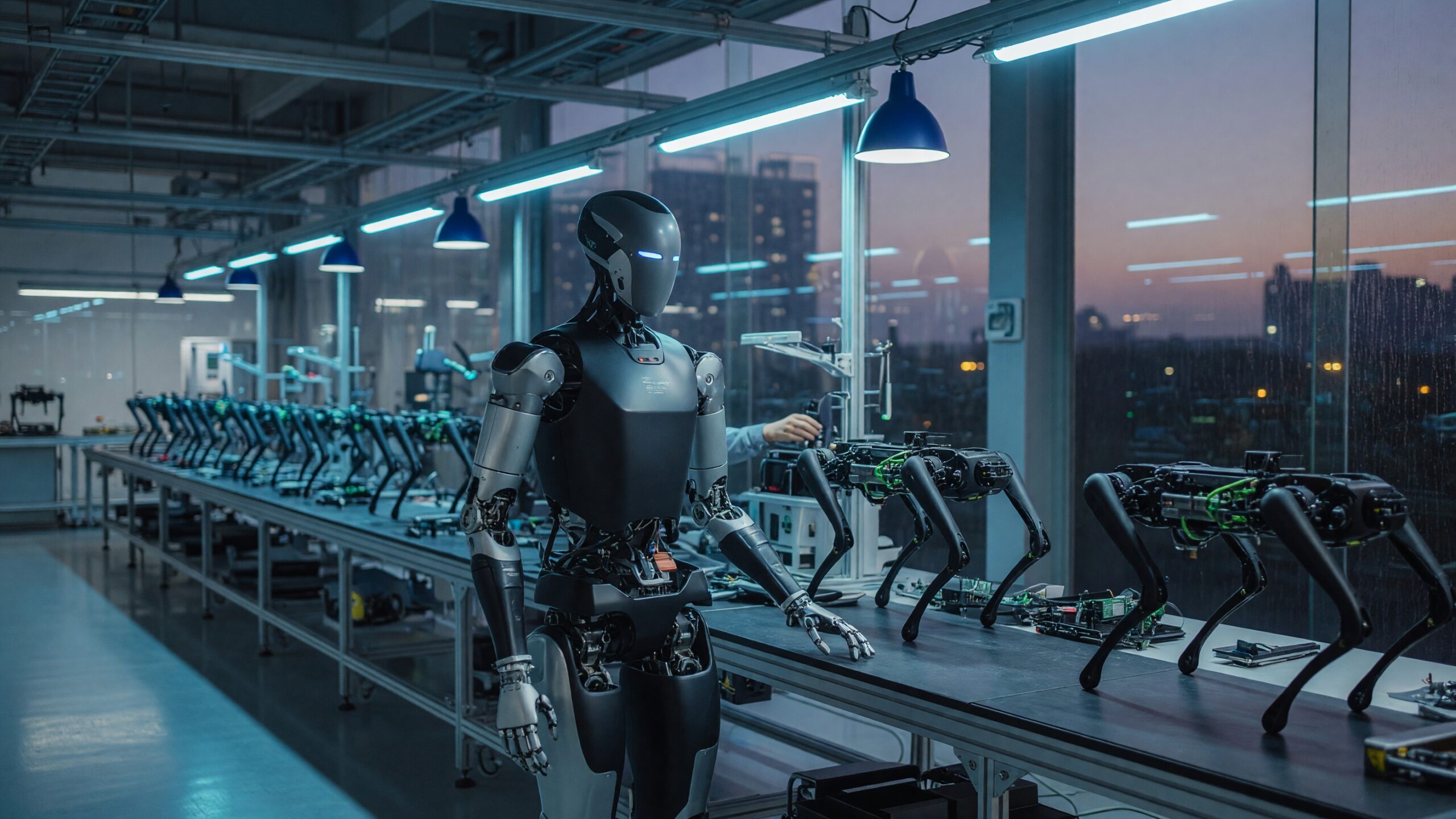
China’s securities regulator has waved through one of the most watched listings of the year. Unitree Robotics, the Hangzhou maker of humanoid robots and quadruped robot dogs, won registration approval from the CSRC for an IPO on Shanghai’s STAR Market, clearing the way to raise about 4.2 billion yuan, roughly $619 million, Reuters reported.
The approval, granted July 3 and valid for 12 months, caps an unusually fast run through China’s listing machinery. The Shanghai Stock Exchange accepted Unitree’s application on March 20, and the listing committee cleared it on June 1, a 73-day sprint that the South China Morning Post flagged as record pace for the board. Regulators do not move that quickly by accident. Beijing wants this company public.
The numbers
Unitree plans to issue at least 40.45 million new shares, a minimum 10 percent float, which implies a post-IPO market value of at least 42 billion yuan, about $6.2 billion. That is a striking markup: a funding round in mid-2025 valued the company at roughly 12.7 billion yuan post-money, and by September 2025 Reuters reported it was eyeing a valuation of up to $7 billion. The public listing crystallizes a roughly threefold jump in about a year.
What separates Unitree from most of the humanoid field is that it makes money. Per prospectus figures reported by TechNode, the company booked 1.699 billion yuan in 2025 revenue (about $250 million) with a net profit of 278 million yuan, and shipped more than 5,000 robots. The mix is shifting fast: humanoids reached 51.5 percent of revenue in the first nine months of 2025, up from 27.6 percent in 2024. The cap table reads like a who’s who of Chinese tech, with Meituan-linked entities the largest outside holder at about 9.65 percent, Sequoia China at about 7.11 percent, plus Tencent, Alibaba and Ant Group.
Where the money goes
The stated use of proceeds, per Caixin and the filing documents, splits three ways: R&D on the AI models that act as robot brains, development of new humanoid and quadruped designs, and a smart manufacturing facility. CITIC Securities is sponsoring the deal.
The manufacturing line item is the tell. Unitree’s playbook has been aggressive price compression: prospectus data shows humanoid average selling prices falling sharply since 2023 even as gross margins held up. That only works if you keep driving unit costs down, and that takes factories, not just models. The IPO is a bet that scale manufacturing, not a research breakthrough, is what wins the humanoid market.
The signal
Step back and the asymmetry is hard to miss. China’s robotics champion is about to trade on a public exchange with audited numbers, a disclosed cap table and a profit line. Its American counterparts are all private: Figure raises multibillion dollar venture rounds, Boston Dynamics sits inside Hyundai, and Tesla’s Optimus program is an accounting line inside a car company. US AI leaders keep delaying their own public debuts, which means public market investors can buy exposure to embodied AI in Shanghai before they can in New York.
This is also industrial policy working as designed. The STAR Market was built to channel domestic savings into strategic technology, and a 73-day approval for a profitable robot maker is the system signaling what it wants more of. Unitree slots into the same self-sufficiency push as domestic chips and open-weight models, the full China AI stack that Beijing is methodically taking public, layer by layer.
What to watch
The caveats matter. The deal has not priced, the approval window runs 12 months, and the final raise can move with market conditions. At the implied 42 billion yuan floor, Unitree would trade at roughly 25 times 2025 revenue, a software multiple for a hardware business whose selling prices are falling by design. STAR Market listings also attract ferocious retail speculation, so a first-day pop will tell you more about sentiment than about robot demand. And it is worth remembering that much of today’s humanoid volume goes to research labs, developers and demonstrations, not to production work. If you are tracking where AI enthusiasm outruns evidence, a 25x revenue multiple on falling ASPs belongs on the watchlist.
Watch three things: the final pricing versus the 42 billion yuan floor, whether rivals like AgiBot and Galbot accelerate their own listing plans, and whether a liquid public comp forces US robotics investors to mark their private bets against a real ticker. The humanoid race just got a scoreboard.
AI and business tech news, verified by a physician who reads the filings. One email a week, no noise.