
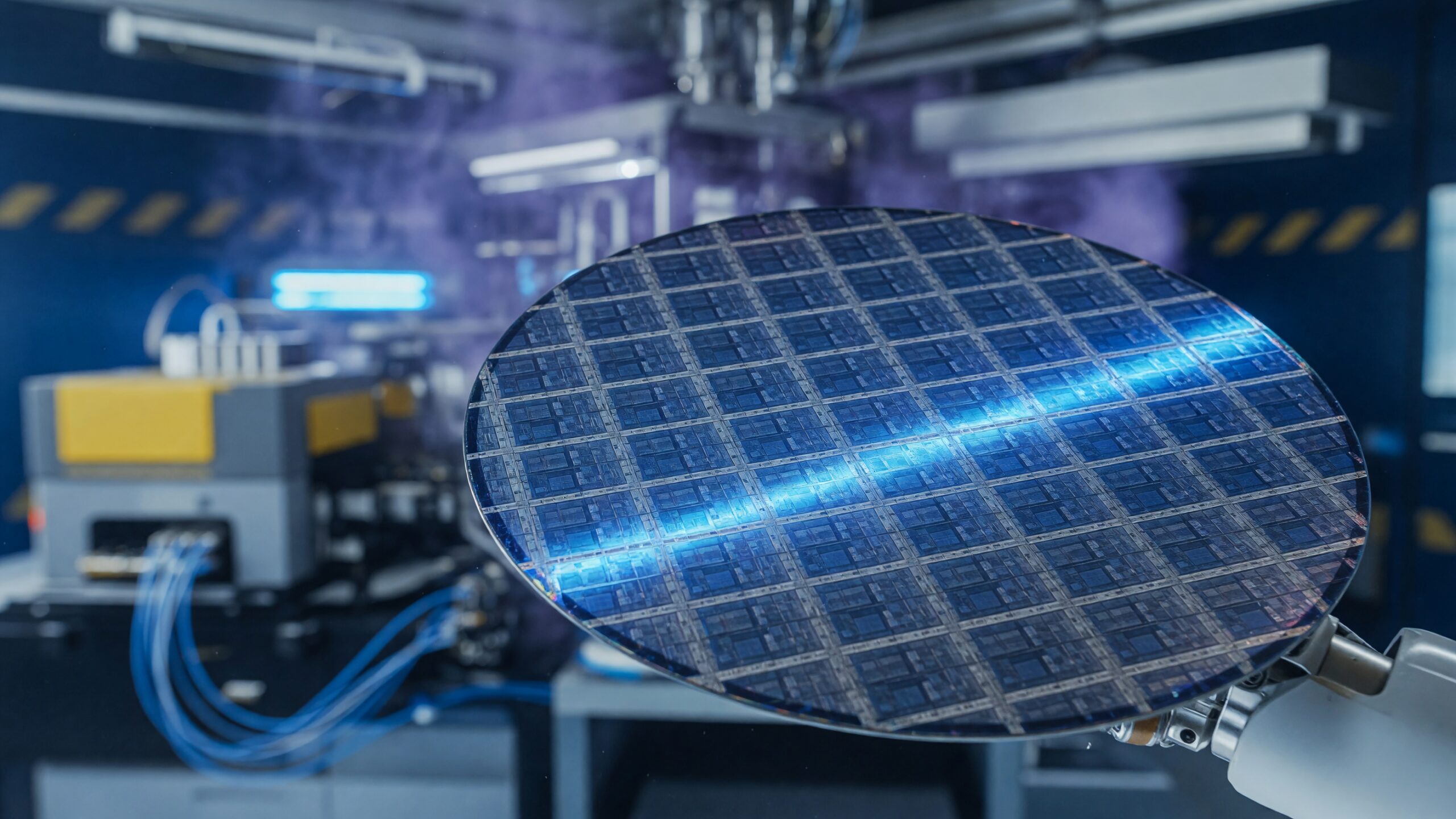
Anthropic is in early-stage talks with Samsung about manufacturing a custom AI chip, according to a July 2 report from The Information covered by TechCrunch. The talks land five weeks after Anthropic confidentially submitted a draft S-1 to the SEC. Read together, the two moves look like one project: tightening control of compute economics before public markets get to price the company.
What’s actually new
The Information’s report describes discussions with Samsung’s foundry business about a chip tuned for Claude workloads. Nothing is settled: no design is locked, there is no decision on whether it would target training or inference, and the project could still be abandoned entirely. Anthropic declined to comment.
The choice of partner is less surprising than it looks. Samsung is already on Anthropic’s cap table: it joined the $65 billion Series H in May as a strategic infrastructure partner alongside SK hynix and Micron. Foundry talks would extend a relationship Anthropic has already formalized in equity.
On the IPO side, nothing has structurally changed since our last check-in on the OpenAI and Anthropic IPO watch. The confidential S-1 went in on June 1, media reports keep circling a fall window (October gets floated most often), and Anthropic’s own language stays deliberately loose: the offering “will depend on market conditions and other factors.”
The numbers
The verified figures all come from Anthropic’s Series H announcement on May 28: a $65 billion raise at a $965 billion post-money valuation, and run-rate revenue that “crossed $47 billion earlier this month.” That run rate deserves its own caveat. It annualizes roughly one month of revenue, it is not trailing twelve-month revenue, and it is a company-chosen disclosure, not an audited figure. A public S-1 would replace it with real financials, including the number nobody outside the company has seen: gross margin.
The compute commitments behind that revenue are already enormous. The same announcement lists agreements with Amazon for up to five gigawatts of new capacity and with Google and Broadcom for five gigawatts of next-generation TPU capacity, on top of data center deals like the $19 billion TeraWulf lease. A custom chip is the logical next rung on that ladder: if you are contracting power in gigawatts, the silicon running on it becomes a line item worth owning.
The signal
Custom silicon before an IPO is a margin story. Inference cost is the closest thing an AI lab has to cost of goods sold, and whoever prices Anthropic’s offering will ask what happens to gross margin at scale. A chip roadmap, even one that ships years out, lets the roadshow answer “it improves.” OpenAI made the same move with its Broadcom-designed inference chip, part of the inference silicon race we have been tracking: every frontier lab is converging on the same conclusion about renting Nvidia forever.
Samsung’s incentive is just as legible. Its foundry business has chased a marquee leading-edge logic customer for years while TSMC took the overwhelming share of advanced AI silicon. An Anthropic win would be exactly that. For Anthropic, even unconsummated talks buy leverage: against Nvidia pricing, and as a third leg beyond Google TPUs and Amazon’s Trainium hardware.
What to watch
The caveats are real. Early-stage foundry talks die quietly and often, and the reporting itself flags that this project could be scrapped. Even a signed deal would not change Anthropic’s economics for years: custom chips take multiple years from design to volume production. The $47 billion figure is a single-month annualization at a company growing fast enough that any snapshot misleads. And the October IPO window is analyst and media projection; neither Anthropic nor its banks has confirmed a date.
Three things to watch from here. First, whether the confidential S-1 flips to a public filing: that document, with audited financials, is the real event. Second, whether Samsung or Anthropic confirms the chip talks on the record, and in what scope. Third, if a design does get confirmed, whether it targets inference, where the volume and the margin battle live. When the public S-1 lands, run rate stops being the headline number and margins start.
AI and business tech news, verified by a physician who reads the filings. One email a week, no noise.