
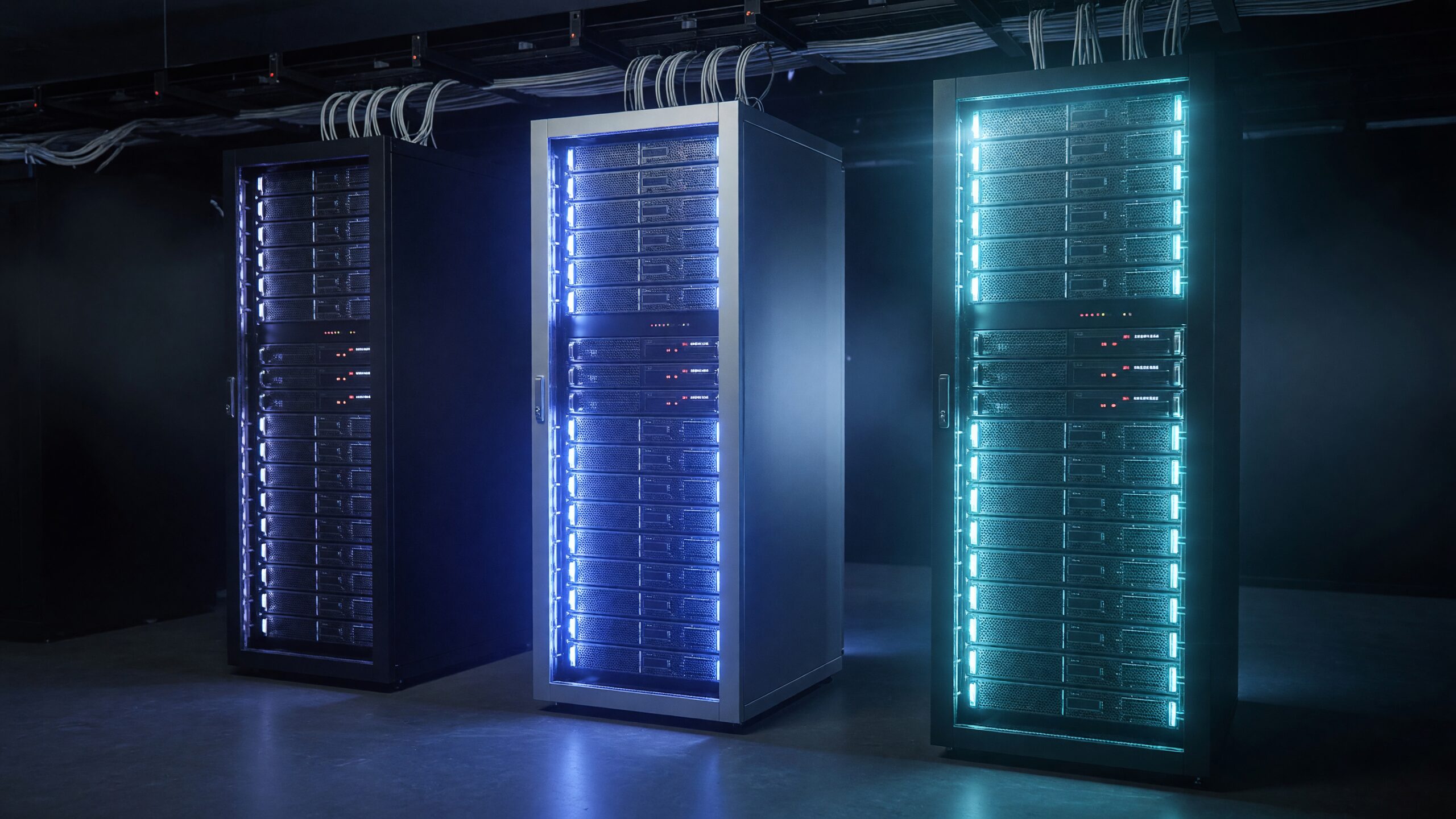
OpenAI announced the GPT-5.6 model family on July 9, splitting its lineup into three named tiers: Sol, Terra and Luna (announcement). The capability claims will get the attention, but the more consequential detail is structural. The version number now marks the generation, while the names mark durable capability and price tiers that OpenAI says will advance independently (preview post). OpenAI just formalized what the whole industry has been drifting toward: the price list is the product.
What’s actually new
Sol is the flagship. OpenAI positions it as frontier-level intelligence, strongest at coding, science, cybersecurity and long-horizon agentic work, with reasoning settings that scale up to a max level and an ultra mode for multi-agent coordination. Terra is the balanced mid-tier pitched at everyday professional work at a lower price. Luna is the fastest and cheapest tier, meant for routine and tightly scoped tasks. All three shipped across ChatGPT, Codex and the API, and notably arrived with day-one general availability on Amazon Bedrock at pricing parity with OpenAI’s own rates.
Alongside the models, OpenAI refreshed its desktop app around ChatGPT Work, an agentic mode for multi-step projects that plans, gathers context from local files and apps, and produces documents, spreadsheets and dashboards. It is available on Plus, Pro, Business and Enterprise plans. One framing correction worth making: some early coverage described ChatGPT Work as a standalone app. OpenAI’s own materials describe it as a mode inside the updated desktop app, unified with regular chat and Codex.
The numbers
Per million tokens: Sol costs $5 input and $30 output, Terra $2.50 and $15, Luna $1 and $6. The ratios are deliberate. Terra is priced at exactly half of Sol on both input and output, and Luna at 40 percent of Terra. That is a clean good, better, best ladder, and the fact that Bedrock lists identical first-party rates suggests OpenAI wants the ladder legible everywhere its models are sold.
The quieter economics story is caching. GPT-5.6 ships improved prompt caching with explicit breakpoints, a 30-minute minimum cache life, cache writes billed at 1.25 times the uncached input rate and cache reads discounted 90 percent. For agentic workloads that replay long system prompts and tool schemas on every call, effective input cost can land far below the sticker price, which matters more than the headline rates for anyone running high-volume pipelines.
The signal
Every frontier lab has converged on the same shelf layout. Anthropic runs Opus, Sonnet and Haiku, and recently made its mid-tier the default. Google splits Gemini into Pro and Flash. OpenAI adopting persistent tier names is an admission that models are now product lines, not launch events, and that most buyers should not be on the flagship most of the time.
For enterprise buyers, the practical shift is that the purchasing question moves from which model to which mix. Procurement can now write contracts against a tier rather than a model version, since OpenAI says the names persist across generations. And the routing decision (Luna for classification and extraction, Terra for drafting, Sol for the hard 5 percent) becomes the real cost lever, the same dynamic we flagged with usage-based Codex pricing and in our cost math on Cursor Composer. Teams that treat tier routing as an engineering discipline will pay a fraction of what teams that default to the flagship pay.
What to watch
Some caveats before taking the launch at face value. Reports circulated that OpenAI eased usage limits on frontier models alongside the release; we could not verify that against OpenAI’s own documentation, and the company’s published plan limits still apply as of this writing. The capability claims for Sol are OpenAI’s own, with no independent benchmarks yet. And the promise that Sol, Terra and Luna are durable names deserves skepticism: this is the company that gave us GPT-4, 4o, o1, o3, 4.1 and 4.5 in under three years. Naming discipline has not historically been an OpenAI strength.
Three things to watch from here. Whether Terra cannibalizes Sol revenue as buyers discover the mid-tier handles most workloads. Whether Anthropic and Google respond on price, since a clean 2x ladder invites direct comparison. And whether day-one Bedrock parity signals a broader distribution strategy, because OpenAI meeting enterprise buyers inside AWS, on equal pricing terms, says the growth priority is now seats and tokens, not exclusivity.
AI and business tech news, verified by a physician who reads the filings. One email a week, no noise.