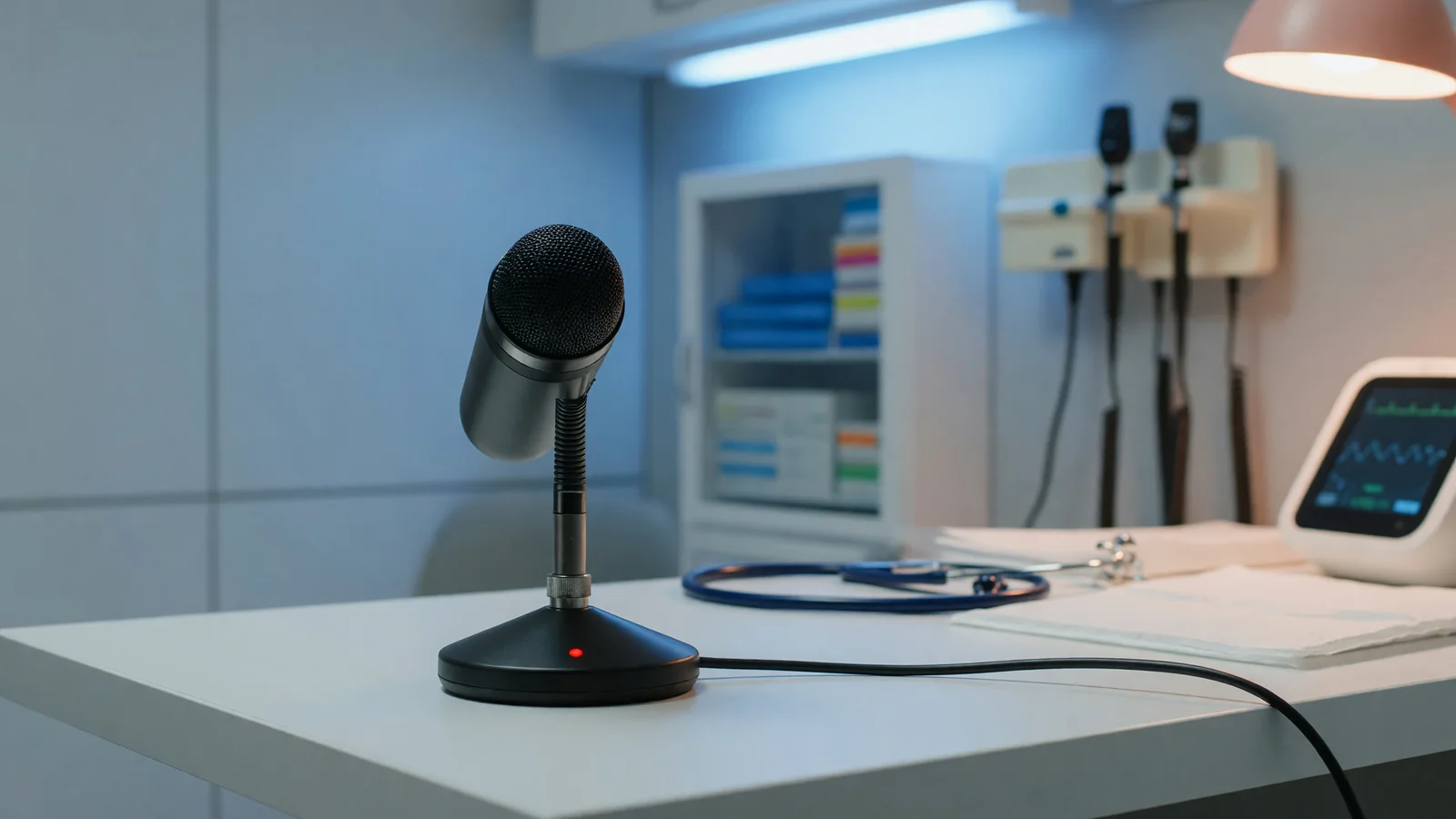
The fastest-adopted AI technology in medicine is not diagnostic. It is secretarial. AI medical scribes, software that listens to a consultation and drafts the clinical note, have gone from novelty to near-standard in about three years. As a physician, I want to explain what they actually do, why adoption outran everything else, and where the honest limits sit.
What an AI scribe actually does
During a consultation, the scribe transcribes the conversation, separates speakers, extracts the clinically relevant content and drafts a structured note, history, examination, assessment, plan, in the format the clinician chooses. The clinician reviews, edits and signs. That last step matters: in every credible deployment, the note remains the clinician’s responsibility, not the machine’s.
Why adoption outran everything else in health AI
Documentation is medicine’s most hated task, consuming hours that clinicians would rather spend on patients, and it carries low clinical risk: a bad draft gets edited, not prescribed. That combination, high pain and low stakes, is why 92 percent of US health systems were deploying or piloting scribes in the latest industry data, and why vendors have grown confident enough to advertise to clinicians like consumer brands.
The honest limits
Three cautions belong in any fair explainer. Accuracy is good but not perfect, and errors of omission, the symptom that never makes the note, are harder to catch than errors of commission. Ambient recording raises consent obligations that vary by jurisdiction, and clinics need a stated policy, not an assumption. And the medico-legal question, who is liable when a signed note contains a machine’s mistake, has a clear answer today (the signer) but little case law behind it.
What to ask before your clinic adopts one
Where is audio processed and stored, and for how long? Does the vendor train models on your patients’ data? What is the published accuracy evidence beyond testimonials? And does the workflow actually save time after editing, measured, not marketed? Scribes are the rare health AI category that has earned its adoption. It will keep that standing only if the evidence culture keeps pace with the advertising. Higher up the risk ladder, that evidence question gets sharper: Aidoc’s foundation model now drafts entire radiology reports, a diagnostic role that demands a far higher bar than a signed clinic note.
Frequently asked questions
What is an AI medical scribe?
Software that listens to a clinical consultation and drafts a structured note, history, exam, assessment and plan, for the clinician to review, edit and sign.
Are AI medical scribes accurate?
Generally good but not perfect. Errors of omission, details left out of the note, are harder to catch than errors of commission, which is why clinician review before signing remains essential.
Do AI scribes record and store patient conversations?
Most process audio in real time and vary in retention policy. Ask any vendor where audio is processed and stored, for how long, and whether it is used to train models.
Who is legally responsible for a scribe-drafted note?
The signing clinician. AI scribes draft; the clinician who reviews and signs the note remains accountable for its accuracy.
AI and business tech news, verified by a physician who reads the filings. One email a week, no noise.